Gaming trends: What to expect

[PLACEHOLDER]

Gaming continues with an accelerated evolution and significant business growth. The incredible virtual worlds are receiving thousands of real-time players, becoming another avenue for networking, as well as entertainment. This is just impossible to ignore.

The gaming industry is one of the most dynamic and innovative sectors, constantly evolving and adapting to new technologies, consumer preferences, and market opportunities.

Photo by Mikhail Nilov via Pexels


Newzoo forecast the game market will grow to $217.9 billion in 2023.

Newzoo 2020 Global Game Market


Cloud and gaming

There was a time, not too long ago, when you would buy your games and play them by inserting them into your console or computer. As more gamers demand access to high-quality games on any device, anywhere, anytime, cloud gaming will become a mainstream option for delivering games over the internet.

Games are now becoming available via subscription model. An example of this is the Microsoft Xbox game pass and Xbox Live Gold.

But aside from subscriptions, games can be accessed via cloud data centres, making it less of a need to own expensive hardware at home. I mean, even Netflix is offering games.

Metaverse

Some may say that before Metaverse became a trending subject, gamers were, and are, used to get together in the virtual world. What we are experiencing is an evolution of such when even music concerts are making their way into Fortnite (i.e. Marshmello, Ariana Grande, and many others).

This is just one manifestation of what is coming as gaming companies are re-evaluating their platforms, and how user experiences will continue transforming the industry.

Many will continue to come to the different platforms for the purpose of driving exotic fast cars, playing FIFA (and many other sport games), exploring amazing kingdoms with Mario or partnering with Link when becoming a legend within Zelda… AND there will be others that will come to many of these worlds for the purposes of socializing.

Extended Reality (XR)

XR brings together:

  • Virtual Reality (VR)
  • Augmented Reality (AR)
  • Mixed Reality (MR)
Photo by cottonbro studio via Pexels

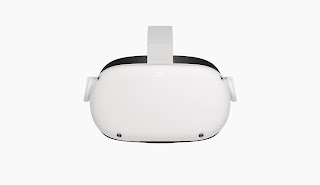
XR brings the immersive experience for gamers. XR gaming is expected to become more mainstream in 2023.

Just VR alone provides the immersive gaming experience that gamers are looking for. The moment a player wears those VR headsets they get transported to a place that allows them to interact with their surroundings (digitally speaking), making the experience engaging and emotional. VR provides accessibility and inclusivity to games removing the barrier of traditional controllers for those that may encounter them challenging because of a physical disability. Perhaps VR may introduce gaming to even that audience that previously showed no interest in video games.

Minecraft


Blockchain

“Play-to-earn” games that reward gamers with cryptocurrencies. Here are some of those companies working in this space:

  • Axie infinity
  • Enter the Gotchiverse with Aavegotchi
  • Crabada 

eSports

The competitive video gaming industry (aka eSports) continues with its popularity. This space goes beyond your average gaming time spent. It is a place to socialize virtually, and a place for content.
The broadcasting of eSports is at an all-time high. Twitch, as a live-streaming platform where content creators broadcast video games, as well as other content, has on average 7.7 million active streamers each month. 

Mobile gaming

Mobile gaming is already a huge segment of the gaming industry, with more than 2.7 billion mobile gamers worldwide in 2021. Mobile gaming is expected to grow even further in 2023, as more people adopt smartphones and tablets as their primary gaming devices.

Conclusion

Gaming has been an ever-growing business. Comparing the old days, when using “floppy disks” to load the games into the computer, to where we are today, it is just an amazing journey. 

As everything, you need to enjoy it responsibly in the right doses. Always make sure you find balance between the virtual and the real world. Every now and then, disconnect and spend time out with others.


Trending posts

Goal setting frameworks for Product Management - OKR and HOSKR

As a business analyst and product manager we often use various frameworks to synthesize and organize our product ideas and goals. I think of frameworks as tools in our product management tool kit which we use depending on the task at hand.  And speaking of goals, OKR is a very popular framework that I often use to set the goals for the products I am managing. However recently I participated the #ProductCon conference hosted by Product School  and I stumbled upon one of the talks in which Rapha Cohen, the CPO at Google Waze introduced a more effective framework for setting product goals. The framework is called HOSKR.  In this post I'll describe both the OKR and HOSKR frameworks in more details using examples. I hope this will provide you, our readers, more practical insights on how to effectively use these frameworks to set your product goals.  OKR OKR stands for O bjectives and K ey R esults. If you are reading this post then you are on our Beolle blog and I am goi...

Digital Sovereignty in a Polarised World - Data, Cloud Power, and the Search for Trusted Alternatives

 Relationships have deteriorated, with trust diminished to an extent that may preclude restoration. The world, once structured to favour certain regions, has undergone significant shifts; for numerous countries, such advantages never existed. In this polarised reality, stakeholders are re-evaluating alliances, as former partners now often embody the role of "frenemy," thereby threatening freedom. This phenomenon is longstanding, rooted in historical power dynamics. When politics and influence supersede principles of fairness, respect, and integrity, ethical boundaries become blurred. Previously, issues that did not directly affect you would get overlooked out of principle, but current risks necessitate action to safeguard sovereignty. Information has consistently served as a key strategic asset, a trend only intensified by technological advancements that have elevated data as the principal factor. In other words, technology has amplified that, and data is the name of the game...

Assembling MLOps practice - part 2

 Part I of this series, published in May, discussed the definition of MLOps and outlined the requirements for implementing this practice within an organisation. It also addressed some of the roles necessary within the team to support MLOps. Lego Alike data assembly - Generated with Gemini   This time, we move forward by exploring part of the technical stack that could be an option for implementing MLOps.  Before proceeding, below is a CTA to the first part of the article for reference. Assembling an MLOps Practice - Part 1 ML components are key parts of the ecosystem, supporting the solutions provided to clients. As a result, DevOps and MLOps have become part of the "secret sauce" for success... Take me there Components of your MLOps stack. The MLOps stack optimises the machine learning life-cycle by fostering collaboration across teams, delivering continuous integration and depl...

AGILE For DIGITAL AGENCIES

Introduction Some Digital agencies have a project process where waterfalls still plays a big part of it, and as far as I can tell, the tech team is usually the one suffering as they are at the last part of the chain left with limited budget and time for execution. I do believe that adopting an Agile approach could make a Digital Agency better and faster. In this article I’m presenting you just another point of view of why it make sense looking at Agile Methodology.  Why Agile for a Digital Agency? The Agile movement started in the software development industry, but it has being proven to be useful in others as well. It becomes handy for the type of business that has changing priorities, changing requirements and flexible deliverables. In the Digital Agency of today you need a different mindset. Creative will always play a huge role (“the bread and butter”). But the “big guys” need to understand that without technology there is no Digital Agency. Technical resources ...

This blog uses cookies to improve your browsing experience. Simple analytics might be in place for pageviews purposes. They are harmless and never personally identify you.

Agreed